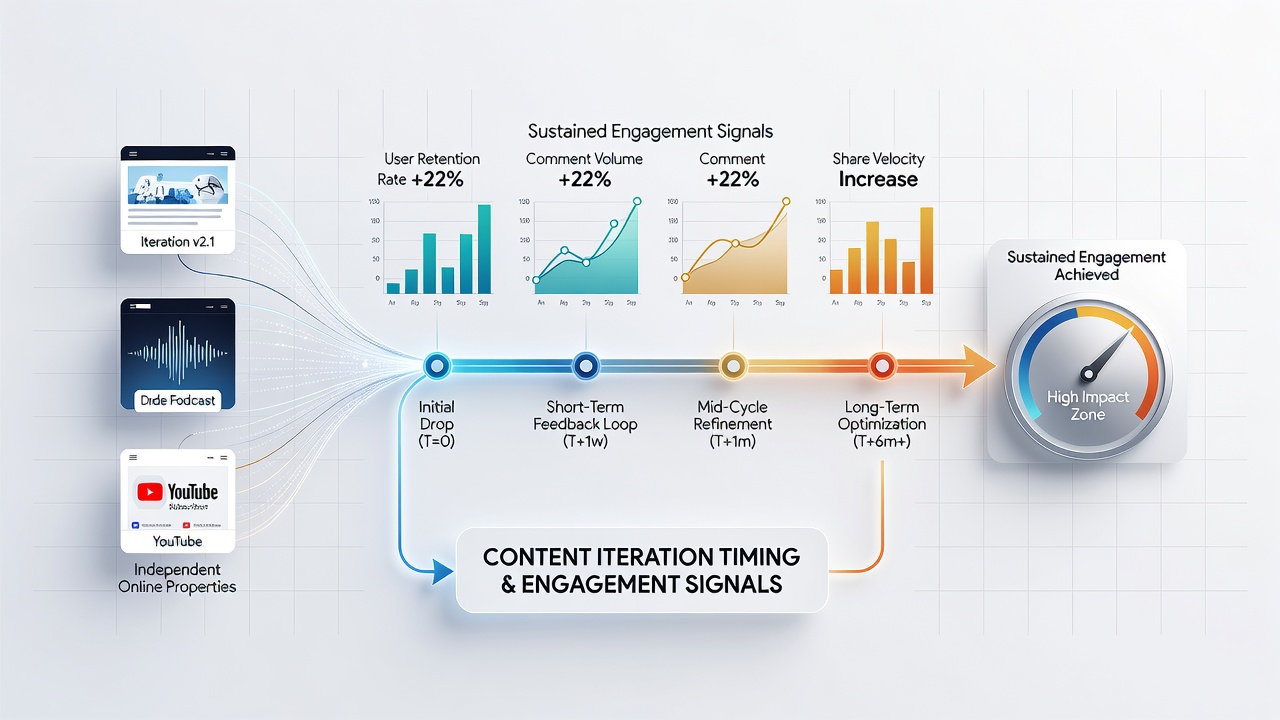
Avery Hartmann · 29 October 2026
Uncovering the Interplay Between Content Iteration Timing and Sustained Engagement Signals Across Independent Online Properties
Independent online properties operate in environments where content iteration timing directly shapes how audiences interact over extended periods, and researchers have documented clear connections between refresh cycles and metrics such as return visits, session duration, and interaction depth. Data from multiple tracking platforms indicate that properties updating core pages at intervals of four to six weeks often record steadier engagement curves compared with those refreshing content on monthly or quarterly schedules alone.
Defining Content Iteration Timing in Practice
Content iteration involves systematic updates to existing articles, guides, and resources rather than solely publishing new material, and analysts track these changes through version histories and publication logs across solo-operated sites. Studies from academic institutions show that timing these revisions around observed drops in user activity helps maintain baseline signals, while random or overly frequent changes can introduce noise into the data sets collected by analytics tools.
Independent publishers frequently align iteration windows with external events such as industry reports or seasonal shifts, and evidence collected through platform dashboards reveals that coordinated timing produces more consistent patterns in pages per session. Observers note that properties maintaining logs of update dates alongside engagement figures can identify optimal intervals that support longer-term audience retention without requiring constant new production.
Engagement Signals and Their Measurement
Sustained engagement signals encompass repeat visits, scroll depth, and time spent on updated sections, and these metrics appear in reports generated by services used by independent operators worldwide. Research indicates that sites refreshing content during periods of natural traffic lulls experience measurable lifts in these indicators within two to three weeks, whereas updates clustered around peak periods may dilute the observable effects.
Figures from digital analytics compilations demonstrate that properties tracking both iteration dates and signal strength develop clearer pictures of cause and effect, and such records often highlight the value of spacing revisions to allow audience response data to stabilize. Those who maintain separate dashboards for timing variables and engagement variables report easier identification of patterns that persist across multiple quarters.
Observed Relationships Across Independent Sites
Analyses of autonomous web properties reveal that iteration timing correlates with changes in loyalty indicators, particularly when updates incorporate fresh data points or expanded examples drawn from recent sources. One examination of niche publishing operations found that revisions completed in the first half of each quarter aligned with improved average session lengths, while delays beyond that window corresponded to gradual declines in repeat traffic.
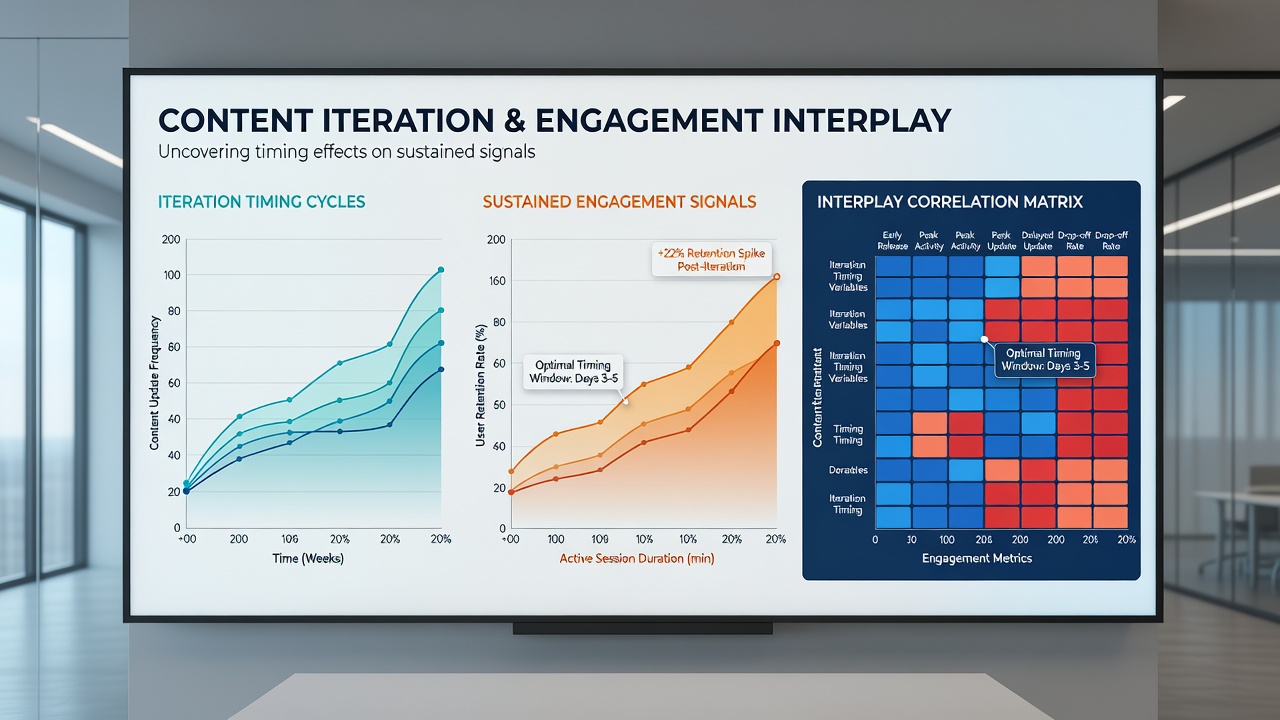
Independent operators who review historical analytics alongside update calendars discover that engagement rebounds tend to follow predictable rhythms once baseline timing is established, and these rhythms hold across different content categories. Data compiled by research groups tracking digital behavior shows similar response curves on sites focused on specialized topics, suggesting the timing factor operates independently of subject matter in many cases.
Patterns Documented Through 2026
As of October 2026, monitoring services report that independent properties experimenting with staggered iteration schedules continue to register steadier engagement trajectories than those using fixed calendars. Records from analytics providers indicate that adjustments made after reviewing three-month signal averages produce more reliable outcomes than those driven by immediate traffic fluctuations alone.
Comparative reviews of site performance data highlight how properties that integrate timing considerations into their content workflows sustain higher baseline metrics across varied audience segments, and these reviews draw from sources including university-led digital studies and government statistical releases on online media consumption. Observers tracking these trends note the consistency of findings across regions represented in the datasets.
Practical Approaches Reported by Operators
Independent publishers often test iteration intervals against engagement logs to isolate effective windows, and reports from such tests show that intervals informed by signal decay points outperform arbitrary schedules. External references such as Pew Research Center analyses of online behavior provide benchmarks that operators cross-reference with their own figures to refine timing decisions.
Additional comparisons drawn from Australian Bureau of Statistics reports on media habits supply regional context that helps contextualize findings from other markets. Properties incorporating these external data points alongside internal logs develop more robust frameworks for predicting how iteration timing will influence sustained signals.
Conclusion
The documented connections between content iteration timing and engagement signals offer independent operators measurable ways to structure update processes, and ongoing data collection continues to refine understanding of these dynamics across standalone platforms. Properties that maintain detailed records of both variables position themselves to observe patterns that persist through changing conditions.