Noah Schröder · 3 September 2026
Mapping the Evolution of Referral Traffic Patterns for Solo Operated Online Platforms
Referral traffic patterns for solo operated online platforms have shifted considerably since the early days of the web when simple hyperlinks between personal sites and directories drove most external visits. Observers note that these platforms, often run by individuals without large teams, rely on incoming links from blogs, forums, news outlets, and social networks to sustain visibility. Data from multiple analytics providers shows that referral sources accounted for roughly 15 to 20 percent of total traffic to independent sites in the mid-2010s, yet that share began to erode as search engines refined their algorithms and social platforms altered how links appear in feeds.
Early Patterns in Referral Sources
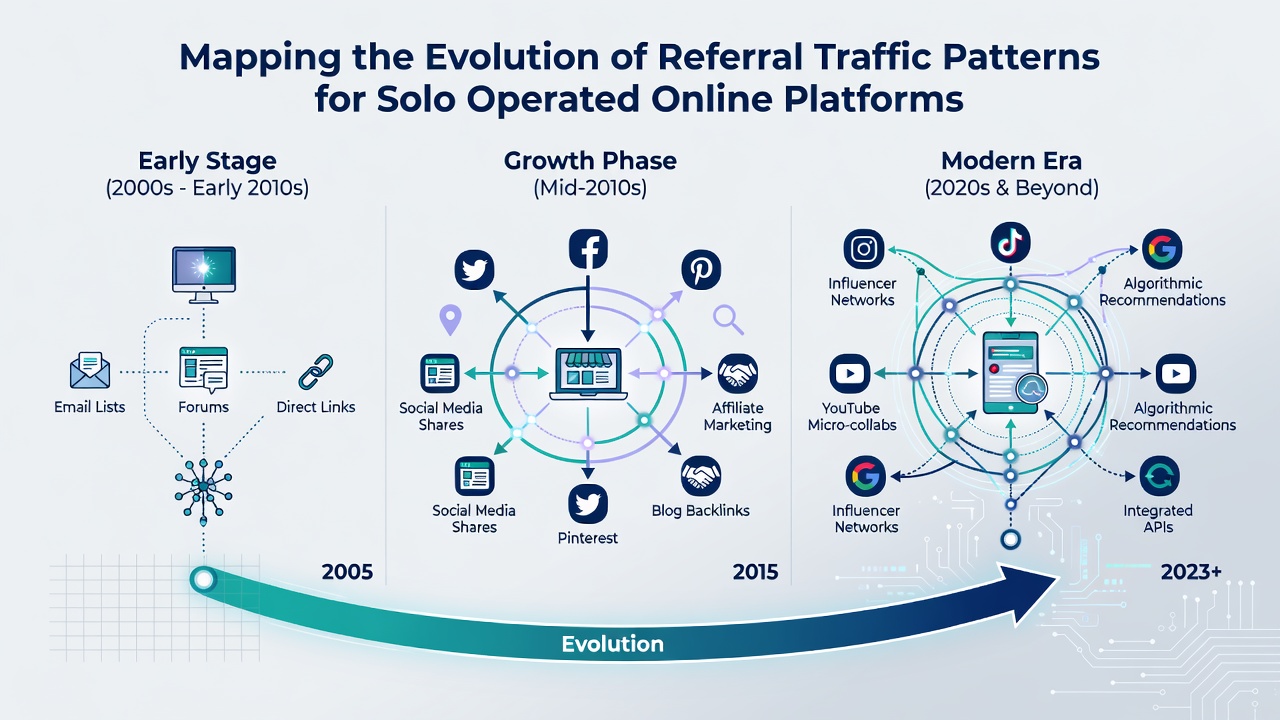
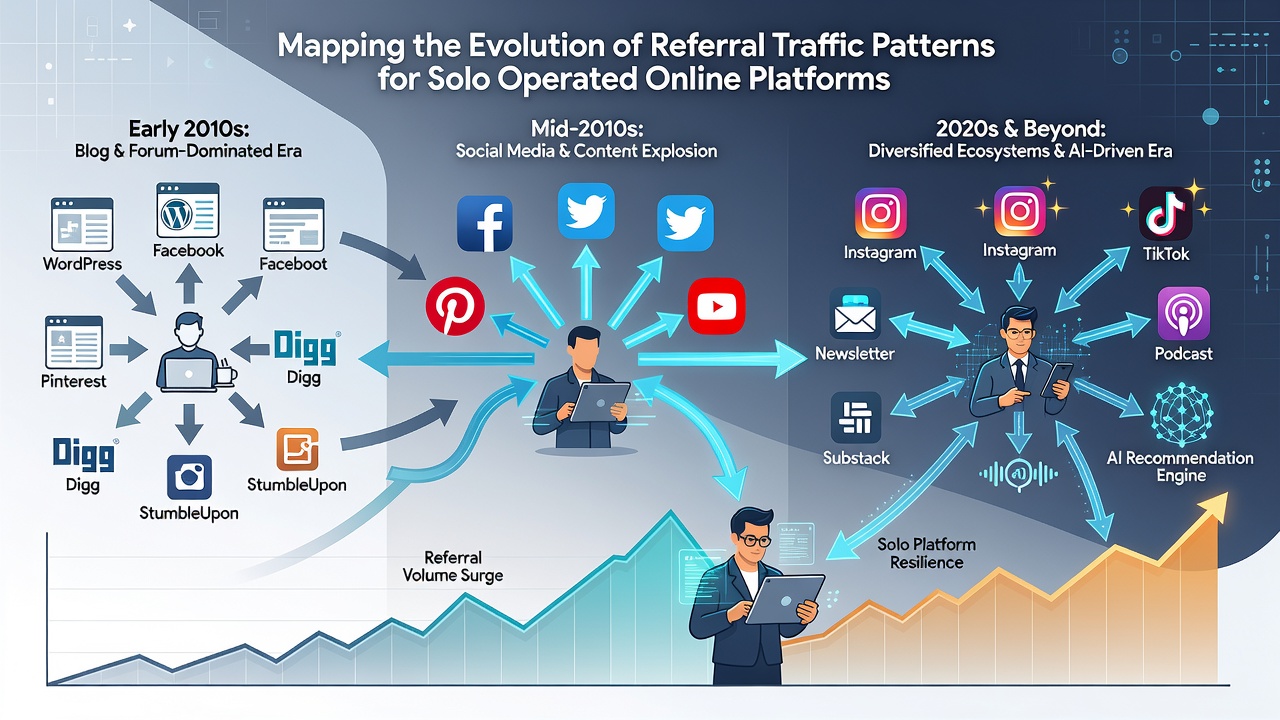
During the first decade of widespread blogging, referral traffic arrived primarily through static links on other personal websites and curated directories. Researchers tracking small-scale sites found that these connections created steady, if modest, streams of visitors who arrived with clear intent because the referring page already matched their interests. By the late 2000s, the rise of social bookmarking services and early microblogging platforms added new layers, and traffic from those channels sometimes spiked when a post gained traction among niche communities. Solo operators often tracked these sources manually through basic server logs, which allowed them to identify which link placements delivered the most consistent results over months rather than days.
Shifts Driven by Platform Changes
Platform policy updates and algorithm adjustments began to reshape referral volume around 2015. Social networks introduced changes that reduced the visibility of external links in user feeds, which in turn lowered the percentage of traffic arriving through those channels for many independent sites. At the same time, messaging apps and closed groups grew in popularity, moving conversations away from publicly indexable pages and thereby reducing the number of discoverable referral paths. Figures from industry reports indicate that by 2018 the average referral share for solo platforms had dropped below 12 percent in several measured categories, while direct and search traffic filled more of the gap. Those who maintained active participation in subject-specific forums and newsletters continued to record steadier referral numbers because those communities still favored explicit link sharing.
Regional and Device Influences on Patterns
Geographic differences appear in how referral traffic behaves across independent platforms. Studies conducted in North America and Europe show higher proportions of mobile referrals from news aggregator apps, whereas data collected in parts of Asia highlight stronger contributions from messaging platforms that embed link previews. Device type also plays a role: desktop users still generate longer referral sessions on average, while mobile referrals tend to produce shorter visits that require clearer calls to action on the destination page. The European Commission has published summaries on digital platform usage that track these variations across member states, and analysts use such figures to adjust expectations for traffic quality when a solo site draws visitors from multiple regions.
Current Trends Observed in 2026
By September 2026, referral patterns continue to evolve as new content formats and privacy regulations affect link visibility. Browser changes that limit third-party cookies have made it harder for analytics tools to attribute referral sources with the same precision as before, leading many solo operators to combine server logs with aggregated reports from privacy-compliant services. Substack-style newsletters and Discord communities now function as steady referral engines for some independent sites, especially those focused on specialized topics where readers actively forward links. Research from academic institutions tracking digital economies notes that platforms emphasizing original, regularly updated content still receive measurable referral traffic from educational and governmental resource pages that maintain curated link lists.
Another development involves the integration of link sharing within short-form video platforms and live-stream chats. These sources deliver bursts of traffic that differ in quality from traditional blog-to-blog referrals, often resulting in higher bounce rates yet occasional spikes in returning visitors when the content resonates. Solo operators who monitor these patterns report that cross-promotion within similar niche communities remains one of the more reliable methods for sustaining referral volume without paid promotion.
Measurement and Adaptation Approaches
Accurate mapping of referral evolution requires consistent tracking methods over extended periods. Many independent platforms combine data from multiple tools to compensate for gaps created by privacy features and app-based browsing. Observers point out that successful adaptation often involves maintaining presence in several link-sharing environments simultaneously rather than depending on any single source. Government statistical agencies in Canada and Australia have released periodic reports on small business digital engagement that include sections on traffic acquisition for micro-sites, and these documents provide benchmarks that solo operators can compare against their own logs.
Conclusion
Referral traffic patterns for solo operated online platforms reflect broader changes in how people discover and share content across the open web. Historical reliance on static links has given way to a more fragmented landscape that includes social feeds, newsletters, messaging groups, and emerging video platforms. Data collected through 2026 shows continued variation by region, device, and content type, while privacy measures require updated measurement practices. Those who track these shifts through server logs and aggregated reports can identify which sources still deliver relevant visitors and adjust their link placement strategies accordingly.