Zara Lorenz · 12 November 2026
How Navigation Redesigns Shape Repeat Visit Patterns Across Independent Digital Ventures
Independent digital ventures often experiment with navigation structures to guide visitors more effectively through content layers, and these adjustments produce measurable shifts in how frequently users return over time. Site owners track metrics such as session intervals and return rates through analytics platforms, revealing patterns that tie directly to menu layout, search placement, and category organization.
Core Elements of Navigation Changes
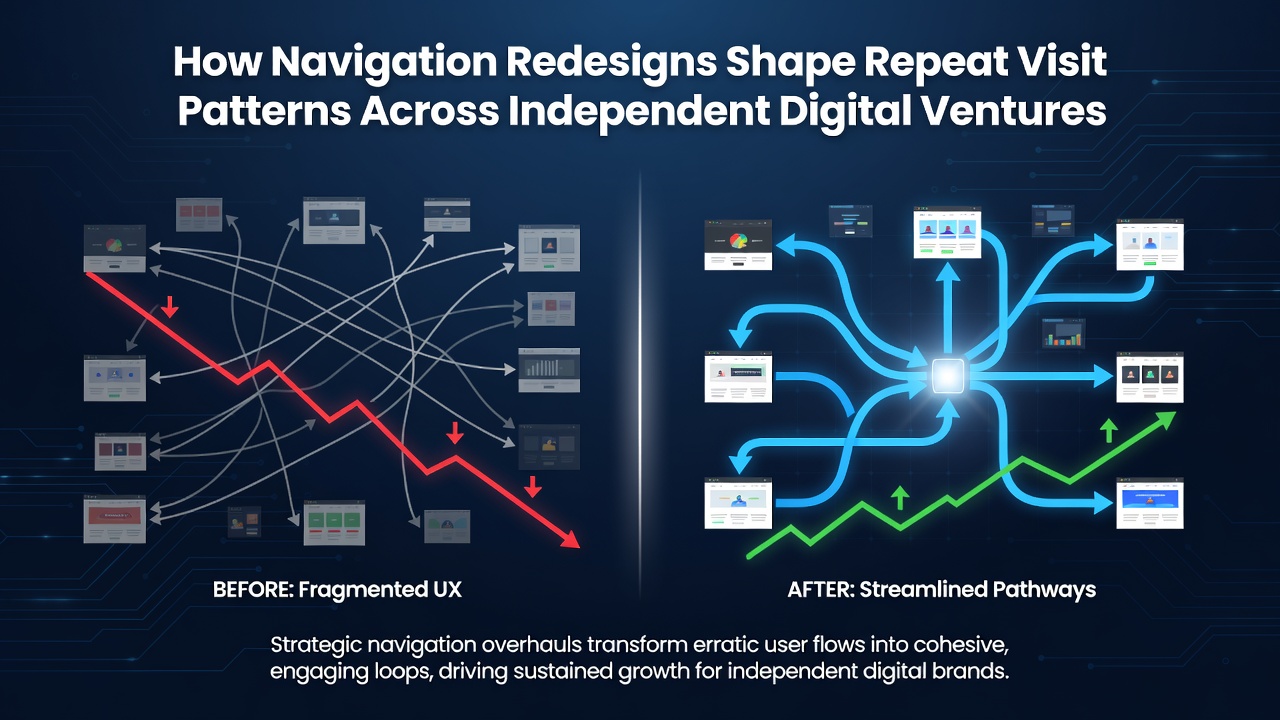
Redesigns typically involve consolidating top-level menus, introducing mega-menus for broader topic coverage, or repositioning search bars to reduce friction during initial exploration. Researchers at various institutions note that such modifications alter the pathways users follow on subsequent visits, because familiar routes become either more intuitive or more cumbersome depending on the execution. Data from multiple platform audits show that streamlined hierarchies correlate with shorter time-to-content on repeat sessions, while overly complex additions extend discovery periods and lower immediate re-engagement signals.
Observed Patterns in Return Behavior
Analytics records across standalone sites indicate that navigation updates completed in late 2025 produced distinct return curves by early 2026. Ventures that simplified primary navigation reported steady increases in weekly repeat visits, with users arriving through direct channels more consistently once the new structure stabilized. In contrast, platforms that layered additional submenus experienced temporary dips in return frequency until users adapted, after which some segments resumed prior habits while others migrated to competitors with clearer layouts.
What's interesting is how these effects compound across different content types. Sites focused on niche informational resources saw navigation tweaks influence bookmarking rates, whereas those emphasizing sequential content series noticed changes in how readers progressed through archives on follow-up visits. Observers tracking independent operations in November 2026 continue to document these divergences through cohort analysis, highlighting that menu depth and labeling consistency play larger roles than visual styling alone.
Influencing Variables Across Ventures
Several operational factors interact with navigation redesigns to shape long-term visit patterns. Load speed after menu reorganization matters because delays at the entry point discourage immediate returns, even when the structure itself improves. Mobile responsiveness also factors heavily, since independent publishers often serve audiences that access sites across devices, and inconsistent navigation on smaller screens disrupts the repeat cycle. Studies from research bodies such as Pew Research Center document how device-specific friction reduces loyalty metrics when redesigns overlook cross-platform consistency.
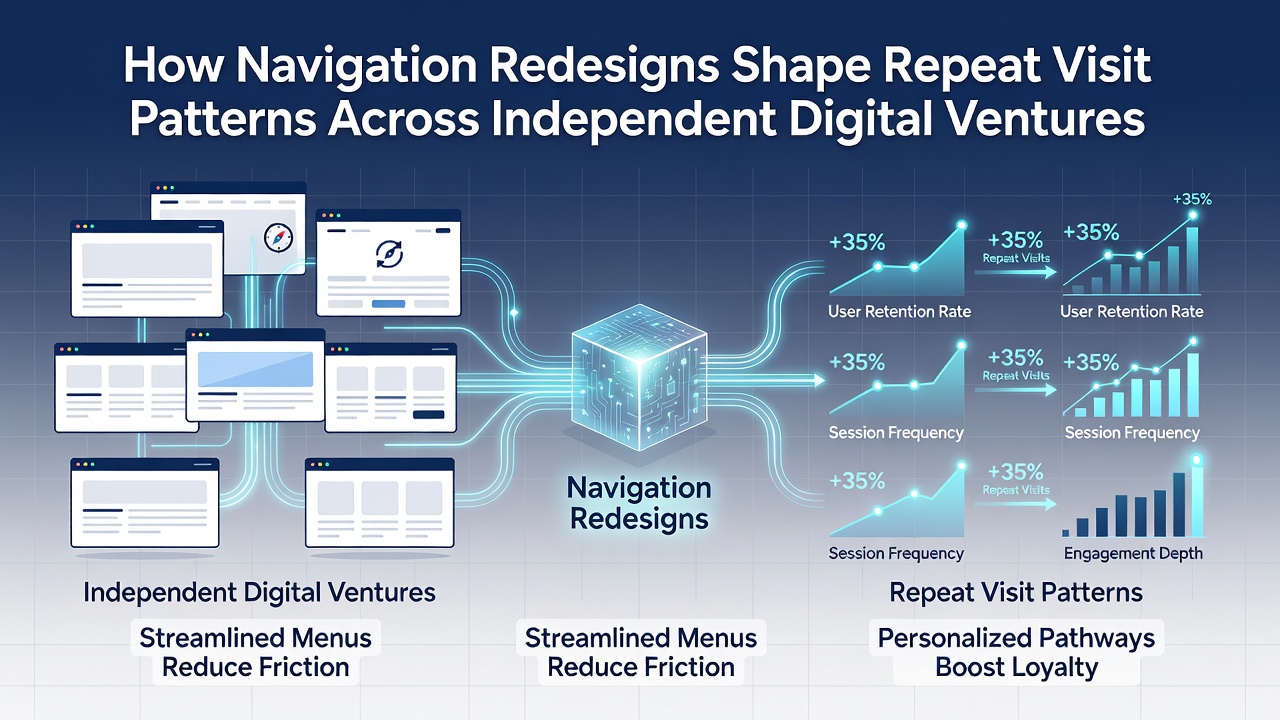
Content volume adds another layer. Ventures that publish frequently find that updated navigation helps surface older material during return visits, sustaining engagement longer than static menus allow. Those maintaining smaller archives sometimes observe quicker saturation, where users exhaust available paths and reduce return cadence unless new sections appear regularly. Geographic differences emerge as well, with data from Canadian digital economy reports showing slower adaptation rates among audiences in regions with lower average connection speeds, whereas European Union digital single market analyses point to higher tolerance for iterative menu testing among users accustomed to frequent platform updates.
Measurement Approaches and Data Sources
Independent operators rely on tools that segment repeat visitors by entry point and subsequent navigation depth. Heatmap overlays combined with path analysis reveal whether redesigned elements receive repeated use or get bypassed after the first encounter. Figures from industry tracking services indicate that sites implementing A/B tests before full rollout achieve more stable return patterns, because they identify friction points early and adjust labeling or placement accordingly. Turnout patterns also vary by acquisition channel, with direct traffic responding more sensitively to navigation clarity than referral-driven visits that arrive with specific destination intent.
Conclusion
Navigation redesigns continue to serve as a primary lever for independent digital ventures seeking to influence repeat visit dynamics, and the outcomes depend on execution details rather than the act of redesign itself. Patterns observed through November 2026 demonstrate that simplified, consistent structures tend to support steadier return rates across varied content models, while incomplete adaptations produce temporary disruptions that resolve unevenly. Ongoing monitoring through established analytics frameworks allows operators to refine these elements as audience behaviors evolve, ensuring navigation remains aligned with how users actually traverse and revisit standalone platforms.