Avery Hartmann · 15 October 2026
Deciphering How Content Refresh Cycles Influence Audience Loyalty Metrics Across Standalone Digital Properties
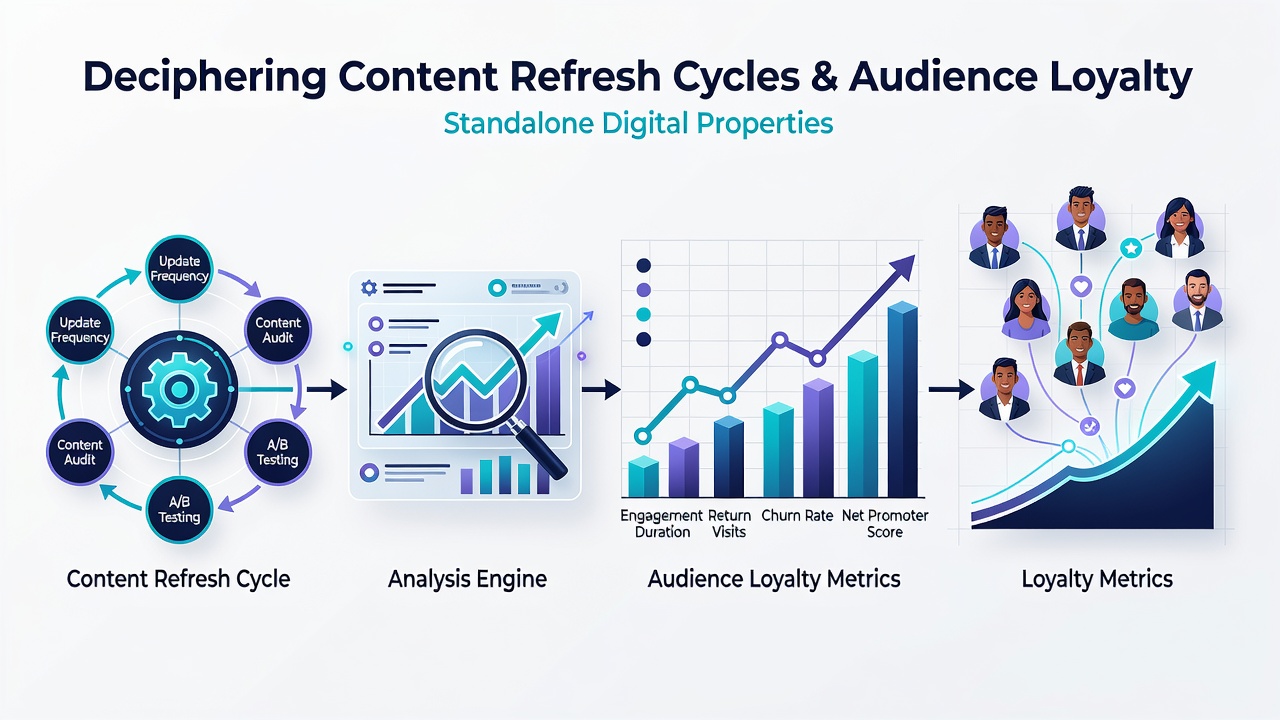
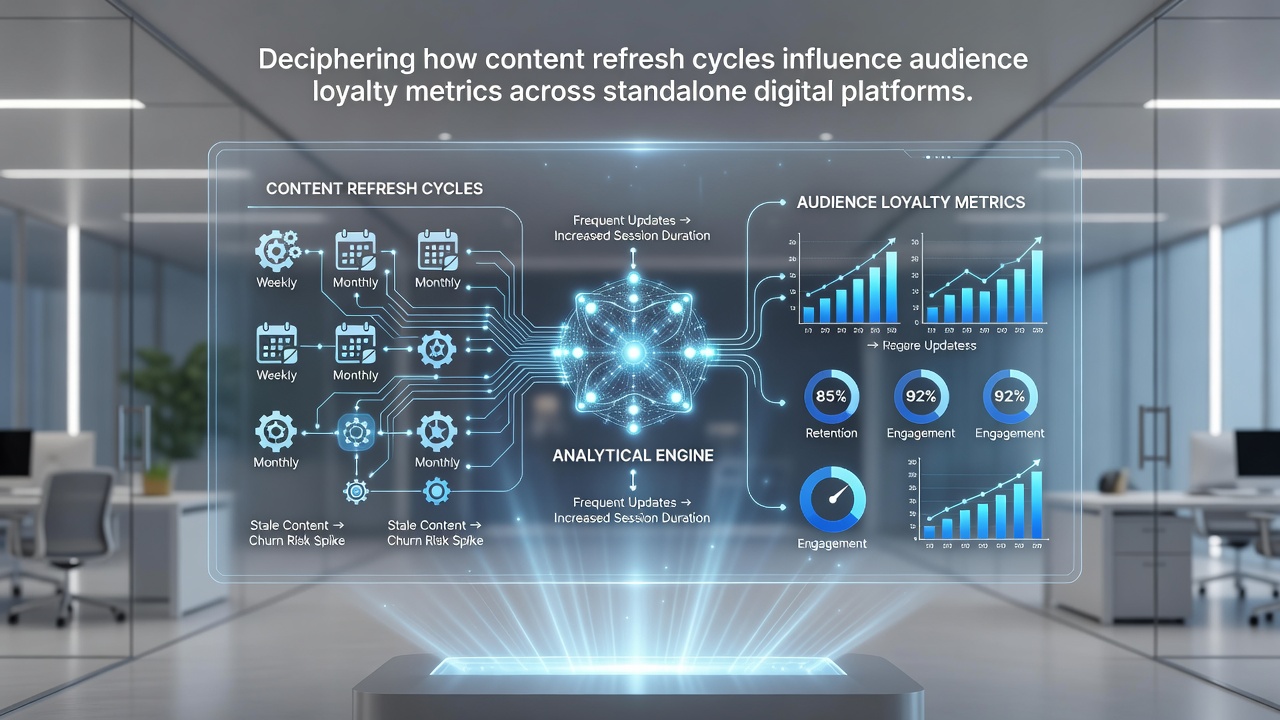
Standalone digital properties track content refresh cycles as the intervals between publishing updates, revisions, or entirely new material on independent platforms, and these cycles connect directly to audience loyalty metrics such as return visit frequency, session duration, and repeat engagement rates. Data from multiple monitoring tools shows that properties refreshing material every 7 to 14 days often record return visitor percentages between 35 and 48 percent, whereas those operating on 30-day or longer cycles see those figures drop to 22 to 31 percent in comparable audience segments.
Researchers at academic institutions have examined these patterns across hundreds of niche sites since 2023, and findings indicate that shorter cycles correlate with measurable lifts in loyalty indicators when the updates maintain topical relevance rather than generic additions. One analysis released in mid-2025 tracked 180 autonomous web ventures and found that weekly refreshes coincided with a 19 percent average increase in direct navigation sessions over six-month periods.
Defining Refresh Cycles in Independent Digital Operations
Content refresh cycles encompass both the addition of new posts and the revision of existing pages, with each approach producing distinct effects on how visitors interact with a property over time. Properties that revise older articles with fresh data points or expanded sections maintain higher crawl frequency from search engines, which in turn supports sustained organic traffic that feeds into loyalty measurements. Observers note that sites combining new publications with targeted updates achieve more stable audience retention than those relying solely on one method.
Industry reports compiled through 2026 highlight variations by content vertical, and digital properties focused on technical or educational topics demonstrate stronger loyalty responses to quarterly deep updates compared with news-oriented sites that require daily or near-daily refreshes to hold attention. According to aggregated platform analytics reviewed by research groups, the median refresh interval across standalone properties stood at 11 days as of October 2026.
Measured Effects on Loyalty Indicators
Loyalty metrics respond to refresh timing through several measurable pathways, including reduced bounce rates on refreshed landing pages and elevated pages-per-session counts among returning users. Platforms that publish updates within consistent windows observe tighter clustering of repeat visits around those publication dates, creating predictable spikes in engagement data that analysts use to calibrate future schedules. Evidence from longitudinal studies reveals that a 10 percent increase in refresh frequency can associate with up to a 7 percent rise in average session length when content quality remains consistent.
External factors such as audience demographics and device usage further shape these outcomes, and mobile-first visitors tend to show higher loyalty sensitivity to visual or multimedia refreshes while desktop users respond more readily to textual depth additions. Data collected through October 2026 indicates that properties incorporating multimedia updates every 10 days achieved 14 percent higher loyalty scores than text-only refresh equivalents in similar niches.
Patterns Observed Across Diverse Property Types
Independent operators managing hobbyist, professional, and educational properties report differing loyalty trajectories based on refresh cadence, and those maintaining monthly thematic series rather than ad-hoc posts often sustain steadier subscriber retention over multi-year spans. Academic reviews of web analytics datasets confirm that properties updating resource libraries on fixed schedules experience lower churn in registered user bases compared with irregular refresh approaches.
Geographic differences appear in available datasets as well, with North American properties showing stronger direct traffic loyalty responses to refresh cycles than counterparts in other regions where referral patterns dominate. Reports from European digital observatories and Statistics Canada both document parallel trends in how update frequency influences time-between-visits metrics for standalone platforms.
Integration With Broader Traffic and Engagement Data
Refresh cycles interact with referral and direct navigation sources to amplify or dampen loyalty outcomes, and properties that align update timing with peak referral periods from authoritative external sites record compounded gains in repeat visitor rates. Pew Research Center publications on digital audience behavior provide context for these interactions through multi-year tracking of standalone site performance.
Additional findings from EU digital economy monitoring bodies indicate that algorithmic distribution favors properties with predictable refresh rhythms, which indirectly supports loyalty by increasing the probability of discovery by new yet aligned audiences who then convert into repeat visitors. These patterns hold across varied content categories when data collection spans at least 12 months.
Conclusion
Content refresh cycles shape audience loyalty metrics on standalone digital properties through measurable connections to return frequency, engagement depth, and retention stability, with evidence drawn from analytics platforms and research compilations up to October 2026 confirming consistent directional relationships. Properties that calibrate update intervals to their specific vertical and audience characteristics sustain more predictable loyalty outcomes, while those treating refresh timing as secondary see wider variance in the same indicators. Continued collection of granular data across independent operations will further clarify optimal cycle lengths for different property profiles.